
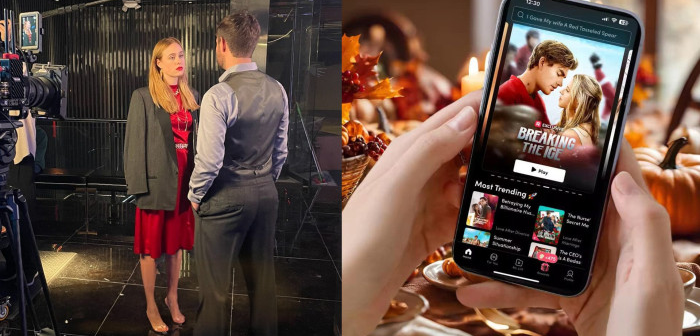
“The Lycan Count falls in love with me” “The Two-Five Life of Vampire President” at first glance sounds abstract and looks more abstract, as the same virus spreads on TikTok. Moreover, after the “infection” of Asia, such micro-short shows are sweeping the United States market and even drawing Hollywood’s attention.
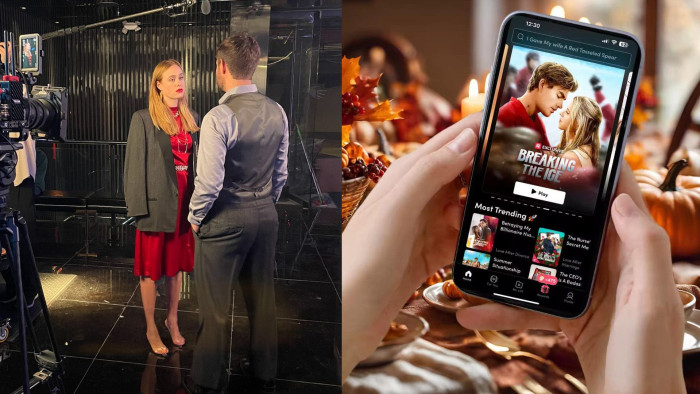
Electronic Squeeze is rewriting a North American entertainment map.
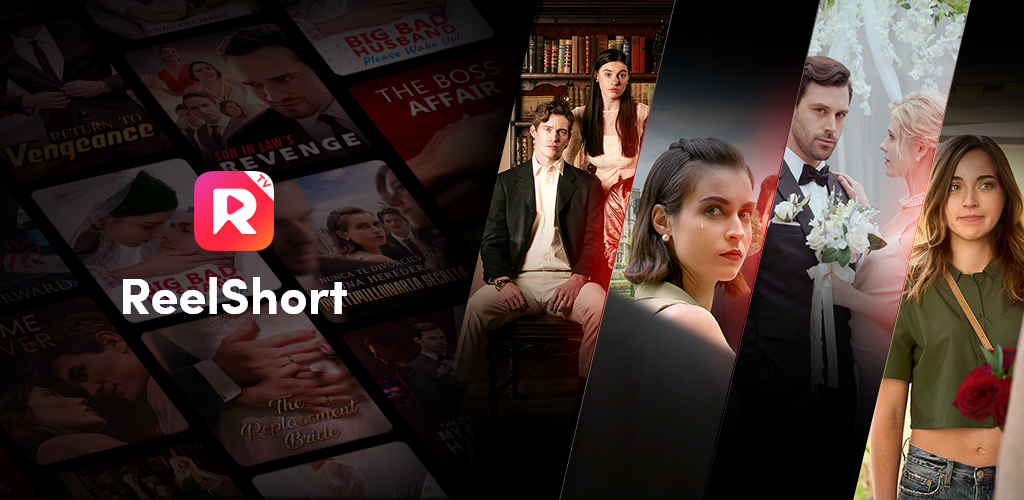
Micro-sync dramas are usually broadcast on a 2-minute set, with a full-way vertical screen, full of soap opera-like emotional events, involving humonges and paranormal elements. ReelShort, created by the Chinese company for technology, is the most visible micro-sync platform in the recent past, and has launched a number of hot “earth-flavored” dramas. Another big head platform is DramaBox. In response to this abstract wave of dramas, Hollywood has been trying to understand how to benefit from it, and production plants such as the Liongate industry are already assessing the relevant projects.
According to the latest report of the application monitoring agency Appfigures, the United States market has seen the emergence of over 200 micro-short play applications, a 47 per cent increase over the previous year, a $100 million jump in total monthly user consumption, a doubling in 12 months, and more than 3 million single-day active users of the front platforms ReelShort and DramaBox.
David Freeman, head of the leading Hollywood agency CAA Digital Media, said: “I get a lot of advice on such topics every week. Artists are actively exploring this area, and writers are attracted by their low content production costs, while large companies are assessing their strategic direction.”
David Freeman pointed out that the core issue now lies in what is more popular and whether this form can be extended to non-short script types (such as reality shows). He predicted: “In time, Netflix will find a way to successfully integrate the vertical video and possibly include it in its strategy to attract viewers of the Z era.”
Hollywood’s Ice Fire.
At a time when the traditional television and streaming media giants were throwing away their money for copyrights (Netflix had previously bought $5 billion to rebroadcast the F1 event), the budget for video production was squeezed, and filmmakers, studios and other practitioners were looking around for other entertainment markets and exploring ways to serve the audience at a low cost. The short play is a low-cost, low-threshold, low-temporal tool.
The cost of producing a single set of mini-syncs is only US$ 30,000 to US$ 50,000, while the cost of a traditional set of mono-sets is almost US$ 5 million. As 80 per cent of the scenes were completed in the green screen studio and the demand for actors was generally low, making the production process simpler and the filming cycle reduced to 72 hours. This “short and flat” feature helps them to adapt to the current fragmented recreational time and to move quickly to the market.

However, the question about the short play was equally sharp. The classic “Twilight City of Twilight ” , “Scene of the Liongate” and others like “Scene of the Liongate” said, “The Chamber requires a single budget of not less than $750,000 to hire a contracted actor, and the average cost of a mini-short play is less than one tenth.” The inter-industry budget divide has created a dilemma for traditional media companies — a new business that might offend the actor union, and a new Blue Sea that would be lost if the tradition was adhered to.
According to the commercial insider network, companies are generally still in the early stages of exploring the form, despite Hollywood ‘ s ongoing interest in the micro-short drama. The Spanish-language media giant Televisa Univision, the representative of the traditional playhouse for practical action in this area, plans to broadcast for the first time 40 short Latin American soap operas on the ViX platform, and to expand to other types of documentaries, comedy and other.
Other companies that maintain a wait-and-see attitude at least maintain curiosity about it. According to one person with knowledge of the internal plan of the Lion Gate, the Lion Gate is still in its early stages of search. Others who were aware of Herman ‘ s ideas indicated that the form had also been discussed within the company.
Quibi’s phantom shadow of Hollywood.
Despite the strong interest in Hollywood, it is not clear how these stand-screen shorts are integrated into the traditional video system, which emphasizes high-value, union-protected talent. There are many pressing issues before Hollywood:
Council relations:Micro-shortfall budgets are often below the threshold for triggering Hollywood trade union rules. How can traditional companies take advantage of their low-cost advantages without alienating trade unions and their members?
Topical outreach:The soap opera is the most popular form of drama, but can it be extended to other types such as reality shows, documentaries, real crime? The A+E global media is trying to reach out to young audiences with a non-play line and plans to launch a first-screen short series around its History brand in the coming months.
Profit mode:Can they really make money? Low production costs are attractive, but what is the market size? How does the income mix between advertising and user fees balance? The founder of the Maple Leaf Interaction of the ReelShort parent company stated last year that users usually pay between $5 and $10 a week.
Distribution channels:How? Televisa Univision owns its own platform. However, production companies without their own distribution channels can use and share platforms such as TikTok or YouTube.
Cultural suitability:Are these dramas too remote from Hollywood’s comfort zone to be manageable? The industry still remembers the lessons of the tragic defeat of the short video platform Quibi, Jeffrey Katzenberg.
Quibi was created jointly by Hollywood producer Jeffrey Carsonberg (formerly President Disney, founder of the Dream Factory) and former Hewlett Packer CEO Meg Whitman, with the aim of changing the crudeness of the then short video content through the production of a short video by a professional team. However, only six months later, when $1.8 billion had been burned, bankruptcy was declared.
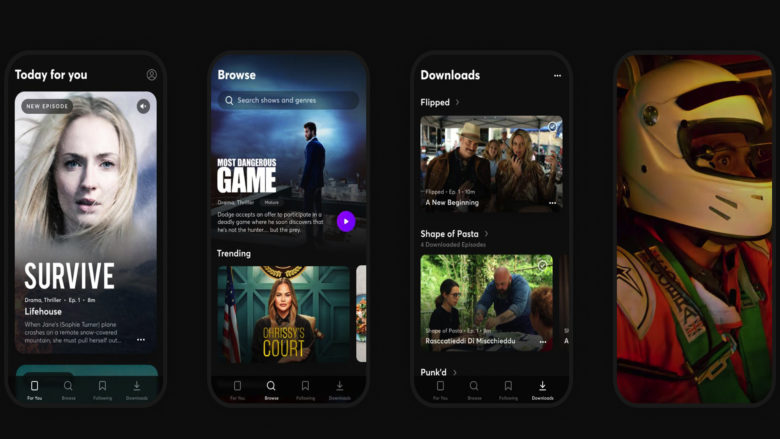
The underlying reason for Quibi’s failure was that its drama production, although more sophisticated, did not follow a “free value-added” pay-on-demand model, that the subscription-based payment model did not match short video consumption habits, and the high cost of good production, as well as the impact of external factors such as the epidemic, to bring it to an end.
“It’s not expensive little steaks, it’s hot dogs on the roadside — cheap, fast, addictive. “Industrial analyst Evan Chapirobi. The analyst conveyed a toilet media theory, that is, micro-short shows are entertainment snacks filled with toilet time, designed for mobile phone users to view experiences and interactive browsing habits. Essentially, it captures the need for fragmentation and recreation in a fast-paced life.
Hollywood transition is just a matter of time.
Some media sources believe that large-scale stream media and production companies will at least test the potential of this form. The giants have shown a willingness to try different forms and distribution platforms, such as Paramount’s 23-part, 1-10-minute-long TikTok on-line in the youth school film ” Dare Girls ” . Youtube and Prime Video in the Amazon are also reasonable as a distribution platform, as it would have supported the user in renting a film or series.

The Net Red Broker Company, Select Management Group, is in the process of signing a contract for micro-sync actors, the main target of which is a prominent actor from ReelShort. “Micro-short dramas can deviate significantly from conventional business.The question is not whether or not to go in, but to dare to let go.“Scott Fisher, the head of the company, speaks out. The vertical platform “has become another channel for the discovery of talent”, like the many top-level net reds such as Mr. Beast on YouTube.
Evan Shapiro also stressed that “it is only a matter of time to see a company’s stand-up red and quickly distill other forms, the central issue being how to make a profit. But if someone takes off, it turns into a pay-for-screen model for traditional media.”
When the micro-short show began to sweep North America, Hollywood finally realized that the film industry might be shifting power from Beverly Hills producers to AI algorithm engineers. Will this recreational change, driven by the “earth culture”, reshape the value chain of the 100-year film industry? After all, in an era of short video rule, it is the true golden track that allows users to forget their contents on the toilet.