
According to Sensor Tower, The Status of Mobile Markets 2026, the revenue from in-house purchases for global mobile applications reached US$ 167 billion in 2025, while the total number of downloads of global applications climbed to 149 billion.
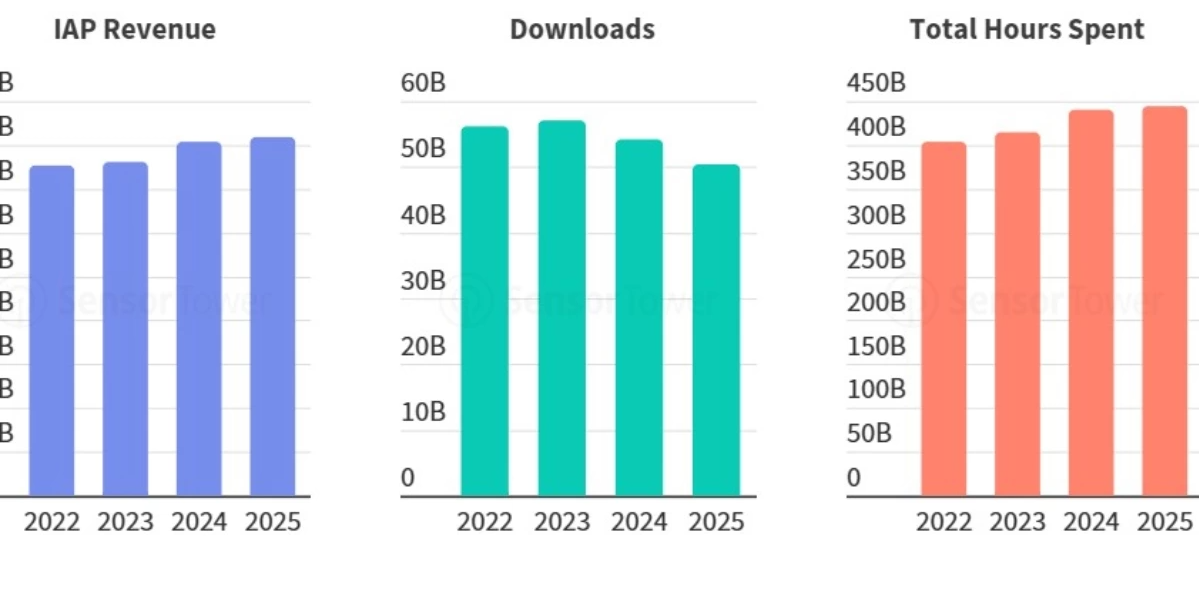
The report shows that consumer spending through in-house purchases increased by 10.6 per cent over the same period, exceeding the 0.8 per cent increase in downloads from new applications. In addition, the total time spent by users on all mobile applications in 2025 amounted to 5.3 trillion hours, an increase of 3.8 per cent over the same period, highlighting the continued dominance of the mobile end in terms of user attention. On average, users spend 3.6 hours per day on mobile applications and 34 applications per month, both of which are up on a par.
The report notes that mobile markets have entered a priority era of realization and that head-on applications are shifting the focus from a simple pursuit of scale to service high-value users, diversified income strategies and deepening user interaction. It further noted that liquidity growth was increasingly driven by “focus” rather than mere downloads. An important finding of the report is that, for the first time, the total income from non-player applications exceeded the game applications. This growth, driven mainly by the generation of AI applications, social media, video stream media and productivity tools, reflects the fact that the “pays attention economy” has moved beyond the playing field and continues to expand.
The discovery of Sensor Tower also shows that Generating AI played a decisive role in 2025, and that AI-based assistants and tools not only rapidly expanded the user base but also developed new applications across the mobile ecology. Despite the global nature of mobile markets, the report emphasizes that local market recognition remains critical and that regulatory policies, tariffs and consumer behaviour, among other factors, continue to shape market performance in all regions.